Menopause: Understanding Changes in Your Body
Accessible health information designed for blind and low-vision women.
What is Menopause?
Menopause is when you have not had a menstrual period for 12 months in a row. It is a normal stage of life, not a disease.
Stages of Menopause
- Perimenopause: Periods may become irregular and symptoms can start.
- Menopause: No period for 12 consecutive months.
- Postmenopause: Symptoms may continue but often change over time.

Common Symptoms
- Irregular periods
- Hot flashes (sudden warmth in the body)
- Sleep problems or lighter sleep
- Fatigue
- Changes in memory or concentration
- Feeling anxious or low in mood
Why Menopause Can Be Harder to Notice If You Are Blind
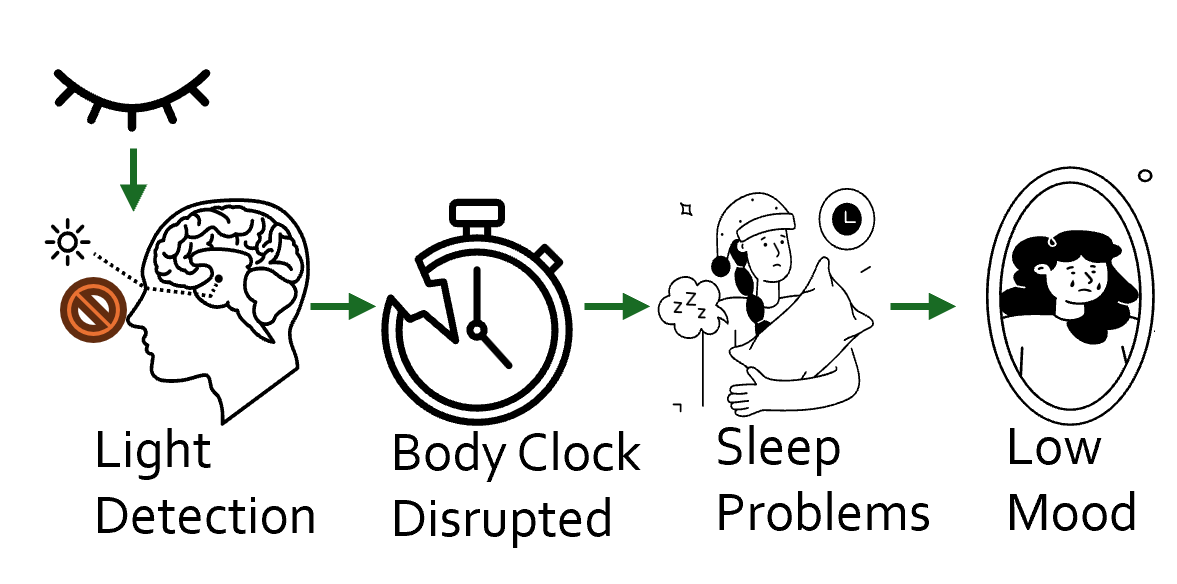
Light helps the body keep a steady internal clock called the circadian rhythm. When light detection is reduced or absent, sleep, energy and mood may already feel different. Some menopause symptoms are similar to these changes, which can make new menopause-related differences harder to notice.
Noticing Patterns in Your Body
Look for changes that repeat or happen together. Noticing one small pattern is helpful.
- Sleep feels lighter than before
- Fatigue happens at times that are different from before
- Mood changes occur with hot flashes
Self-Care Tips
Daily habits
- Eat a variety of fruits and vegetables
- Drink enough water
- Move your body daily (gentle activity is fine)
- Keep a regular sleep schedule
- Avoid smoking
Managing hot flashes
- Wear light, breathable clothing
- Keep your sleeping area cool
- Notice triggers: caffeine, hot drinks, stress, or alcohol
Supporting mood
- Try breathing, stretching, or gentle yoga
- Connect with supportive people or groups
When to Seek Help
Contact a healthcare provider if symptoms:
- Interfere with daily life
- Feel severe
- Are unusual for you
Support, small lifestyle changes, and medical care can improve symptoms.
References
Content based on guidance from the American College of Obstetricians and Gynecologists, British Nutrition Foundation, and National Health Service.